All Categories
Featured

Enhancing Security Without Slowing Down the Creative Process
Table of Contents

Technical Foundations of 2026 Digital Infrastructure
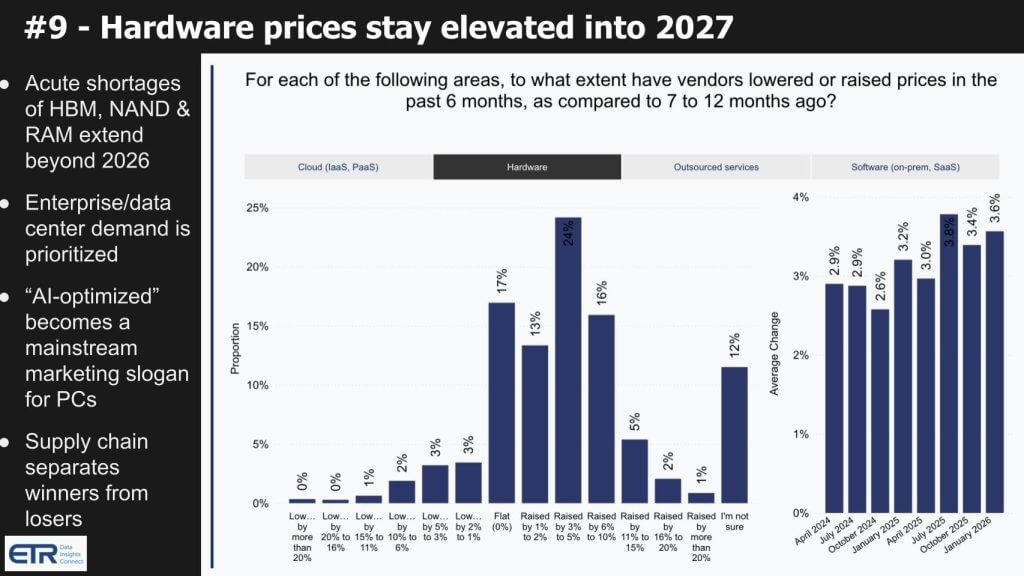
The construction of innovation centers in 2026 requires a departure from traditional information center designs. High-density compute requirements, driven by self-governing representative swarms and real-time spatial making, have pushed power density requirements past 50kW per rack. Physical architecture now prioritizes thermal management systems that move beyond air cooling. A lot of new centers in the local market now incorporate direct-to-chip liquid cooling or two-phase immersion systems. These technical choices are no longer optional for centers running the current neural processing units that produce tremendous heat throughout reasoning cycles.
Structural engineering for these websites concentrates on floor loading capacities that can manage the weight of thick battery storage and heavy cooling manifolds. As energy prices fluctuate, the ability to store power in your area utilizing solid-state batteries has actually ended up being a standard function. These systems supply a buffer versus grid instability and permit the facility to get involved in frequency response programs. This integration of energy storage and calculate capacity specifies the modern technique to developing high-performance hubs.
Hardware lifecycles have reduced substantially by 2026. Designers design modular white-space environments where whole rows of devices can be switched out without disrupting the surrounding operations. This modularity encompasses the power circulation systems, which now use software-defined power to designate electrical power based on real-time work concern. Such versatility guarantees that the physical shell of the building stays relevant even as the hardware inside develops every eighteen months.
Connection and Low-Latency Requirements in the regional market
Networking in 2026 centers on the integration of terrestrial fiber and satellite-to-edge handoffs. For an innovation center to stay competitive, it needs to offer sub-millisecond latency to local industrial zones. This is achieved through localized carrier-neutral meet-me rooms that link straight to the regional 6G core. Reliance on Digital Excellence Hubs facilitates these connections, making sure that data packets bypass the general public web where possible. By shortening the physical range in between the information source and the processing node, these centers support the millisecond-sensitive requirements of remote robotic surgical treatment and autonomous transport coordination.
Internal networking material has likewise moved towards optical switching. Conventional copper-based networking can not handle the bandwidth needed for 2026-era AI design synchronization. Innovation hubs now deploy hollow-core fiber within the building to decrease signal deterioration and heat generation. These optical backplanes permit for a flatter network architecture, which streamlines the management of enormous data transfers between storage clusters and calculate nodes.
Security at the networking layer has moved to a zero-trust model implemented at the hardware level. Every package is checked by devoted security processors that run at line speed. This prevents lateral movement of dangers within the center, a vital requirement for centers that host data from numerous contending companies. Encryption is now quantum-resistant by default, protecting data versus future decryption capabilities that might occur within the next years.
Energy Method and Sustainability Protocols
The energy demand of a 2026 innovation center is significant. To manage this, centers in the local area are increasingly turning to on-site microgrids. These microgrids combine hydrogen fuel cells with rooftop solar arrays, offering a multi-layered technique to energy durability. Hydrogen functions as a long-duration storage medium, changing the diesel generators that prevailed in previous years. This shift decreases the carbon footprint of the center while improving its reliability throughout long-lasting grid interruptions.
Heat recovery systems represent another significant architectural shift. Rather of venting waste heat into the atmosphere, 2026 hubs utilize heat exchangers to supply hot water or space heating to surrounding property or industrial districts. This circular energy model makes the facility a more integrated part of the local utility network. In some cases, the earnings produced from offering waste heat can balance out a considerable part of the center's operational costs.
Water usage for cooling remains a point of examination. Modern hubs use closed-loop systems that require minimal water top-offs. By removing evaporative cooling towers, these facilities minimize their effect on local water supplies. Tracking systems utilize AI to enhance the cooling loop in real-time, adjusting flow rates based upon weather and internal heat loads. This accuracy makes sure that the facility operates at the most affordable possible power use effectiveness ratio.
Data Sovereignty and Localized Processing
Laws relating to data residency have become stricter in 2026. Innovation hubs must now supply clear physical and rational separation for information based on its origin. This has actually caused the rise of sovereign cloud enclaves within bigger facilities. These enclaves are governed by regional legal standards, making sure that delicate copyright stays within the jurisdiction of the local region. This architecture permits business to use worldwide tools while preserving rigorous control over their data properties.
Edge processing has changed how data is consumed. Instead of sending all raw information to a central cloud, 2026 hubs serve as regional filtration points. They process the bulk of the data locally, sending out just the essential metadata or results to larger data. This lowers the problem on long-distance transmission lines and reduces the cost of data storage. It also improves privacy, as delicate raw information never ever leaves the local hub.
The use of High-Performance Digital Excellence Hubs has actually emerged as a technique for companies to manage these localized data requirements. By implementing particular protocols for information handling and storage, these companies can comply with local laws without sacrificing the speed of their digital operations. This localized technique is especially efficient in sectors like health care and finance, where information privacy is a primary concern.
Spatial Computing and the Hybrid Labor force
The physical style of development hubs in 2026 represent a workforce that is divided between physical presence and spatial telepresence. Meeting spaces are equipped with high-fidelity volumetric capture selections, enabling remote participants to appear as life-sized three-dimensional avatars. This requires considerable local compute power and high-bandwidth wireless networking within the building. The walls are frequently treated with customized materials to prevent disturbance with the different tracking sensors utilized for enhanced reality user interfaces.
Workspace design has moved away from fixed desks toward versatile cooperation zones. These zones are created to be reconfigured within minutes, supported by under-floor power and data tracks. Acoustic engineering is more crucial than ever, as individuals regularly move in between peaceful deep-work tasks and loud collective sessions involving both physical and virtual employee. Smart lighting systems change the color temperature level and intensity throughout the day to support the circadian rhythms of the occupants.
Gain access to control is dealt with through biometric systems that run without physical contact. Facial recognition and gait analysis allow licensed personnel to move through the building without stopping at traditional checkpoints. This data is managed on a private ledger within the center, guaranteeing that personal biometric information is never ever exposed to external networks. These systems also track occupancy levels in real-time, enabling the structure's climate control system to change based upon the variety of people in a particular area.
Operational Durability and Future Planning
Developing a development hub in 2026 is an exercise in getting ready for the unknown. Facilities must be created with redundant courses for power, data, and cooling. This redundancy is not practically equipment failure however likewise about having the ability to perform maintenance without taking the entire system offline. Every part, from the transformers to the cooling pumps, is kept track of by thousands of sensors that anticipate when a part is most likely to stop working before it really does.
Strategic planning involves keeping a percentage of the floor area unallocated. This "gray space" enables the hub to respond rapidly to new technological requirements, such as the abrupt need for quantum processing units or specialized bio-computing hardware. By having pre-cabled and pre-cooled area ready, the facility can onboard new renters or innovations in days instead of months. This speed is a main differentiator for top-tier hubs in the local market.
The management of these facilities is increasingly automated. AI-driven building management systems manage the everyday operations, from enhancing energy usage to scheduling janitorial services based upon actual space usage. Human staff concentrate on top-level method and complex troubleshooting, while the software application ensures that the environment remains within the stringent specifications required for high-performance computing. This shift toward self-governing operations minimizes human mistake and reduces the general expense of maintaining the hub.
Long-term practicality depends upon the ability to integrate with the evolving local infrastructure. As the regional area updates its transport and energy networks, the center should have the ability to adjust. This may involve adding electrical automobile charging stations for self-governing shipment fleets or linking to new high-speed rail links. By staying versatile and deeply incorporated with its environments, the innovation hub acts as a stable foundation for the digital needs of 2026 and beyond.

Table of Contents
Latest Posts
The Role of Generative Models in Engineering New Solutions
Managing Large Datasets in AI-Driven R&D Environments

Managing Intellectual Property Within Shared Research Ecosystems
Latest Posts
The Role of Generative Models in Engineering New Solutions
Managing Large Datasets in AI-Driven R&D Environments
Managing Intellectual Property Within Shared Research Ecosystems